Thanks to over £2.5 million of funding from LIBOR and the National Lottery Heritage Fund in the UK, MAST led a major rescue excavation of the first HMS Invincible, with partners Bournemouth University and site archaeologist and licensee, Dr Dan Pascoe. She sank in the Solent off Portsmouth in 1758.
The excavation took place over three dive seasons. Between 2017 and 2019 between 9 staff divers and volunteers we spent 117,119 minutes working “downstairs” or underwater.
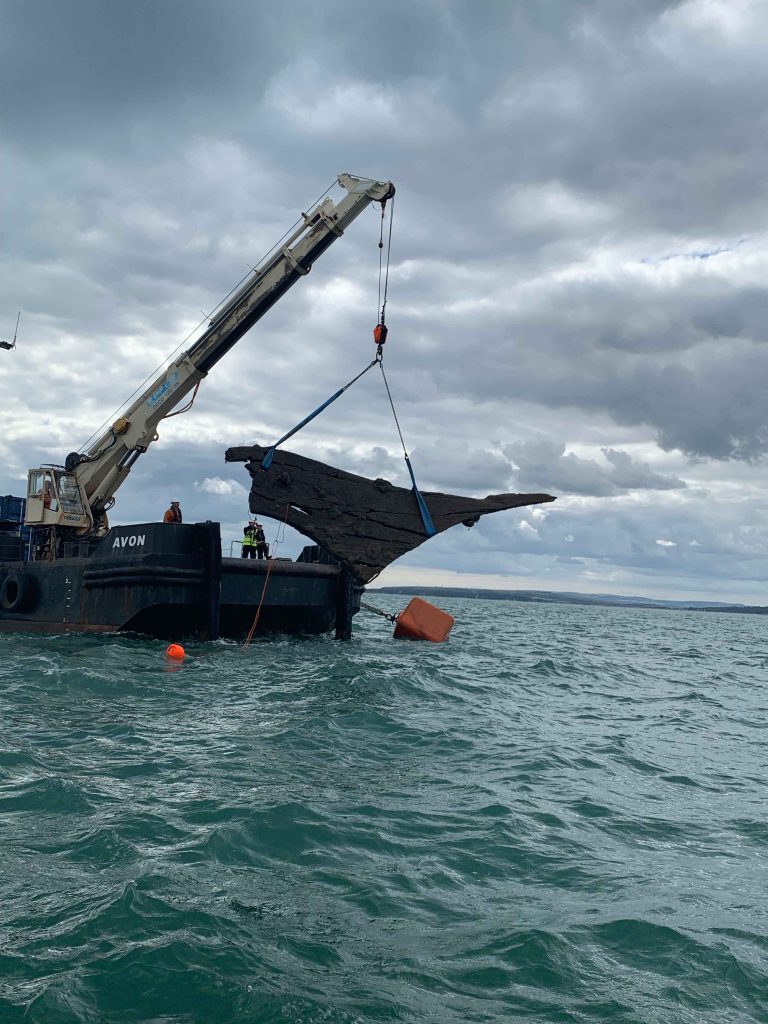
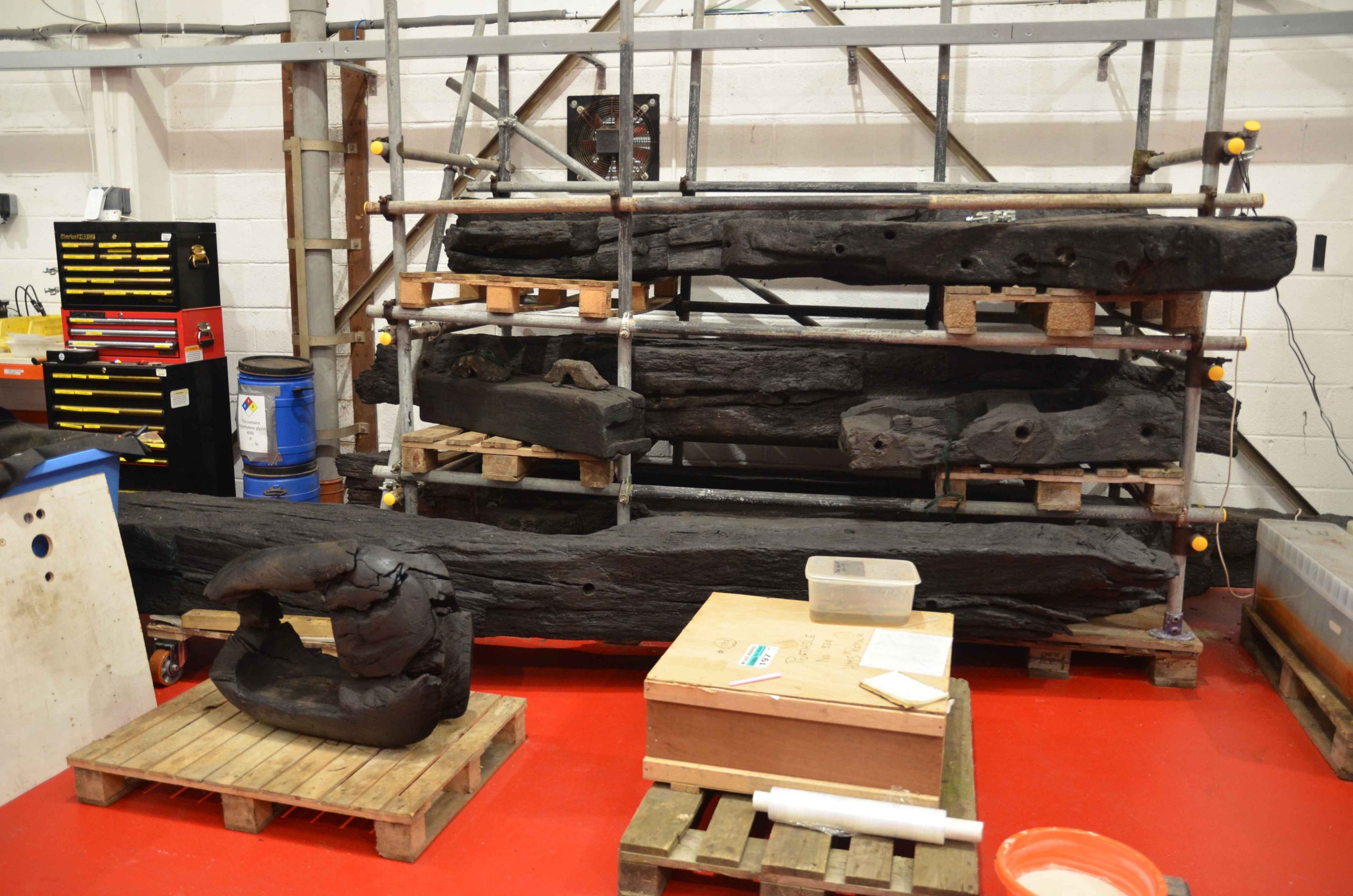
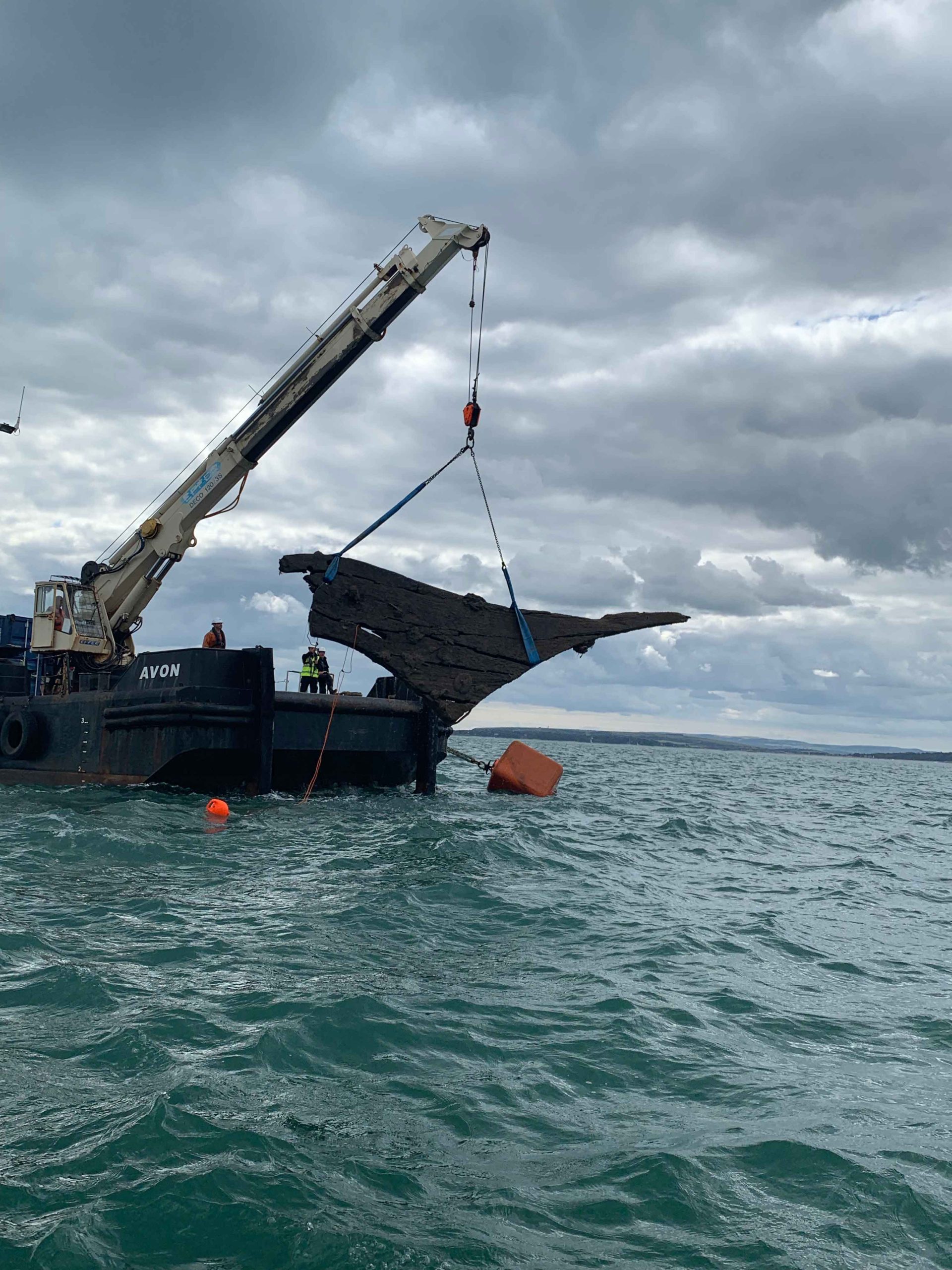
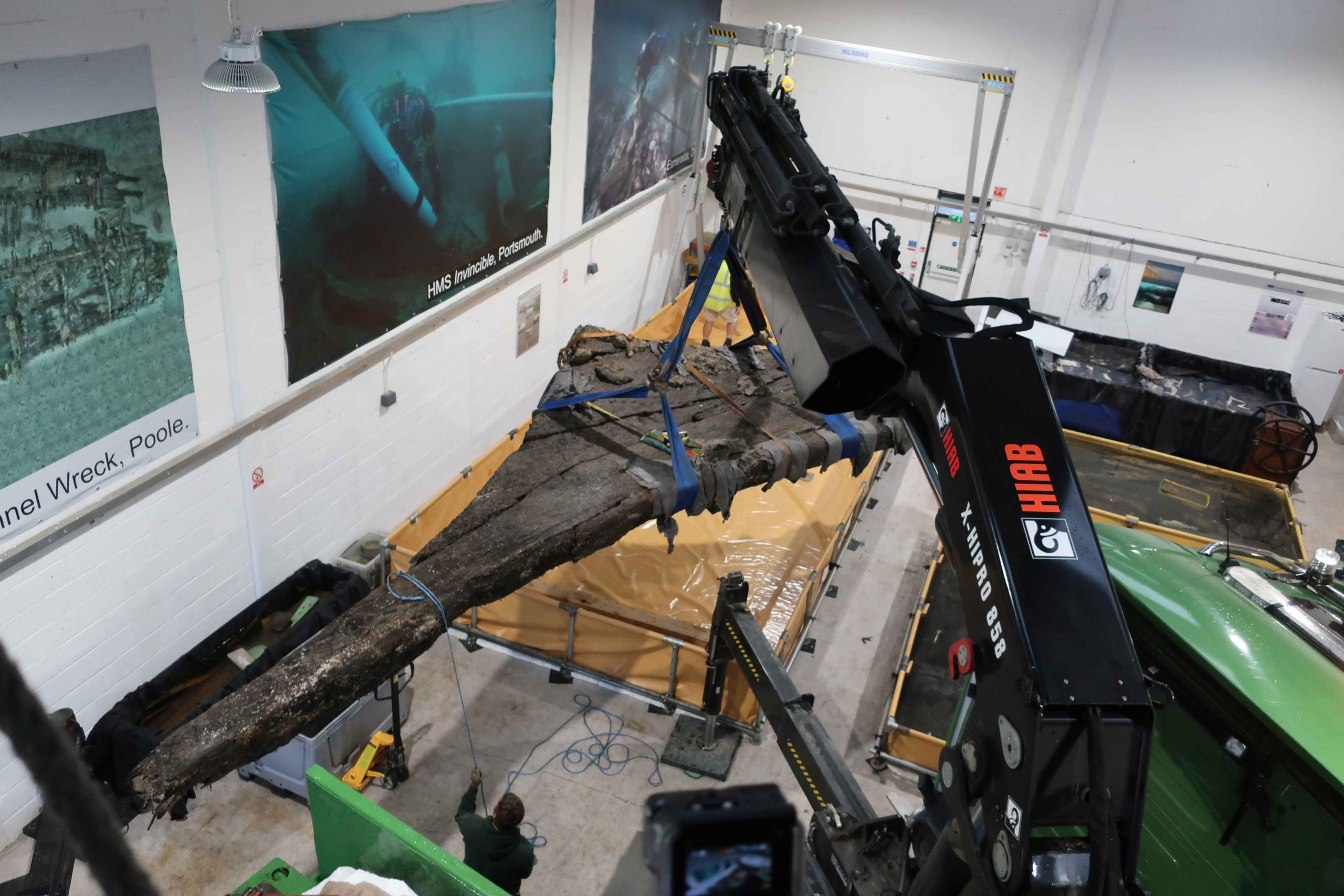
The cutwater, excavated towards the very end in September 2019, has now finally completed its conservation and will soon make its way back to the Royal Navy Museum in Portsmouth where it will be rebuilt.
Here are 3 photos from excavation to completed conservation (click on the images to enlarge). The process has taken 7 years!
Invincible was built by the French in 1744 and captured by the British on the 3rd May 1747, her remains are highly significant both historically and archaeologically for the following reasons:
Of international importance, HMS Invincible’s build was ahead of her time. Her special design, unique lines and 74 gun capacity were copied and her Class became the backbone of the Royal Navy’s fleet right up to the end of the sailing Navy and the beginning of the age of steam, marked in the United Kingdom by the launch of HMS Warrior in 1860. By the Battle of Trafalgar over three-quarters of the Royal Navy’s ships-of-the-line were 74-gun vessels of the French design. The French had invested new technologies in her; whereas most ships of the period were constructed of wood, HMS Invincible was built with 200 iron knees. Later, under the British, she was the first ship to be fitted with an iron hearth to replace the centuries old brick galley and flintlock firing mechanisms were fitted to her guns. In fact, the maintenance of this Class was one of the drivers of the industrialisation of the dockyards and, in turn, for the Industrial Revolution in the United Kingdom.